
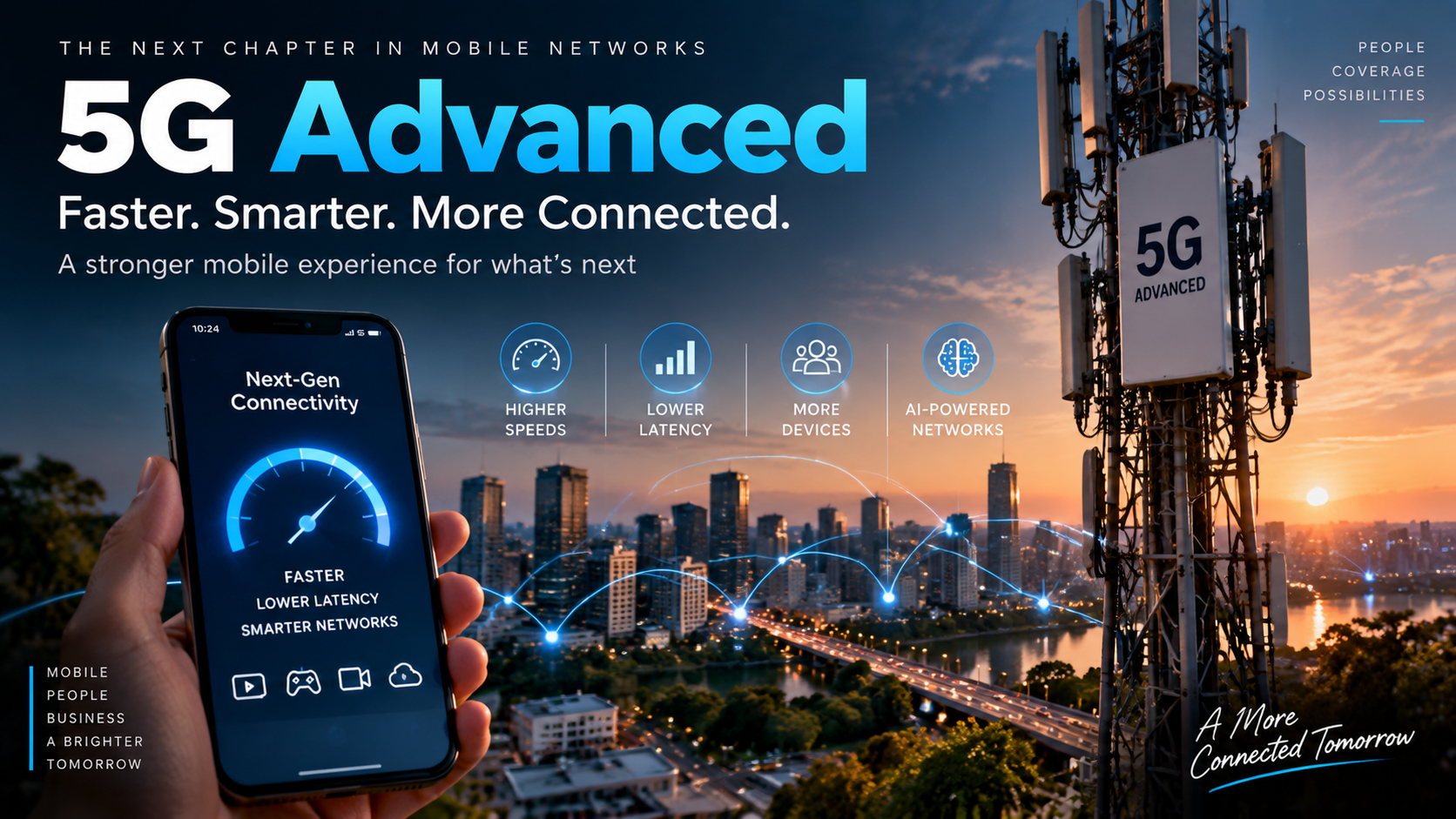
5G Advanced is becoming the next important step in the evolution of mobile networks. While many users are still experiencing the benefits of regular 5G, telecom companies are already preparing the next generation of wireless technology.
The goal is not only to make mobile internet faster. The bigger focus is creating smarter networks that can handle more devices, reduce delays and support new technologies such as artificial intelligence, autonomous vehicles and advanced industrial systems.
What Is 5G Advanced?
5G Advanced is an upgraded version of existing 5G networks. It is sometimes called the bridge between 5G and future 6G technology.
Unlike earlier network upgrades that mainly focused on speed improvements, 5G Advanced focuses on making networks more intelligent, efficient and reliable.
Telecom operators are working on improvements that can help networks automatically manage traffic, provide better coverage and support more connected devices.
Why Telecom Companies Are Moving Beyond 5G
The number of connected devices is growing every year.
Smartphones are no longer the only devices using mobile networks. Smart cars, industrial machines, security systems and Internet of Things devices are also creating huge demand for reliable connectivity.
Traditional networks may struggle when millions of devices need to communicate at the same time. This is where advanced network technologies become important.
How 5G Advanced Can Improve Mobile Internet
One of the biggest improvements expected from 5G Advanced is better network performance.
Users could experience more consistent speeds, especially in crowded locations such as stadiums, airports and city centers where mobile networks often become overloaded.
The technology also aims to reduce latency, which means devices can communicate faster with less delay.
This improvement could be useful for online gaming, video calls, remote operations and real-time applications.
AI and Telecom Networks Are Coming Together
One interesting change in modern telecom is the growing connection between artificial intelligence and network management.
Future networks may use AI to predict traffic problems, automatically adjust resources and improve network efficiency.
Instead of engineers manually solving every network issue, AI-powered systems could help operators identify problems faster.
What Does This Mean for Smartphone Users?
For everyday users, the biggest changes may not appear immediately.
You may not suddenly notice a massive speed jump after a 5G Advanced upgrade. Instead, the improvements could appear as more stable connections, better performance in crowded areas and smoother experiences with data-heavy services.
Streaming high-quality video, cloud gaming and video conferencing could benefit from more reliable networks.
The Road Toward 6G
5G Advanced is also an important step toward the future of 6G networks.
While 6G is still years away from commercial availability, telecom researchers are already exploring technologies that could provide extremely fast communication and new possibilities.
5G Advanced will help the industry test and develop many of the ideas that could become part of future wireless networks.
Challenges Ahead
Building advanced telecom networks is not simple.
Operators need large investments in infrastructure, new equipment and spectrum resources.
Another challenge is making sure advanced connectivity is available beyond major cities. Rural areas often face slower network upgrades because deployment costs are higher.
Why This Matters for the Future
Connectivity has become a basic part of modern life.
From remote work and online education to smart cities and industrial automation, reliable networks are becoming increasingly important.
5G Advanced represents a shift from simply connecting phones to creating a smarter digital environment.
Final Thoughts
The future of telecom will not only be about faster download speeds.
The next generation of networks will focus on intelligence, reliability and the ability to connect billions of devices.
5G Advanced is an important step in that journey, bringing the world closer to a more connected future.