
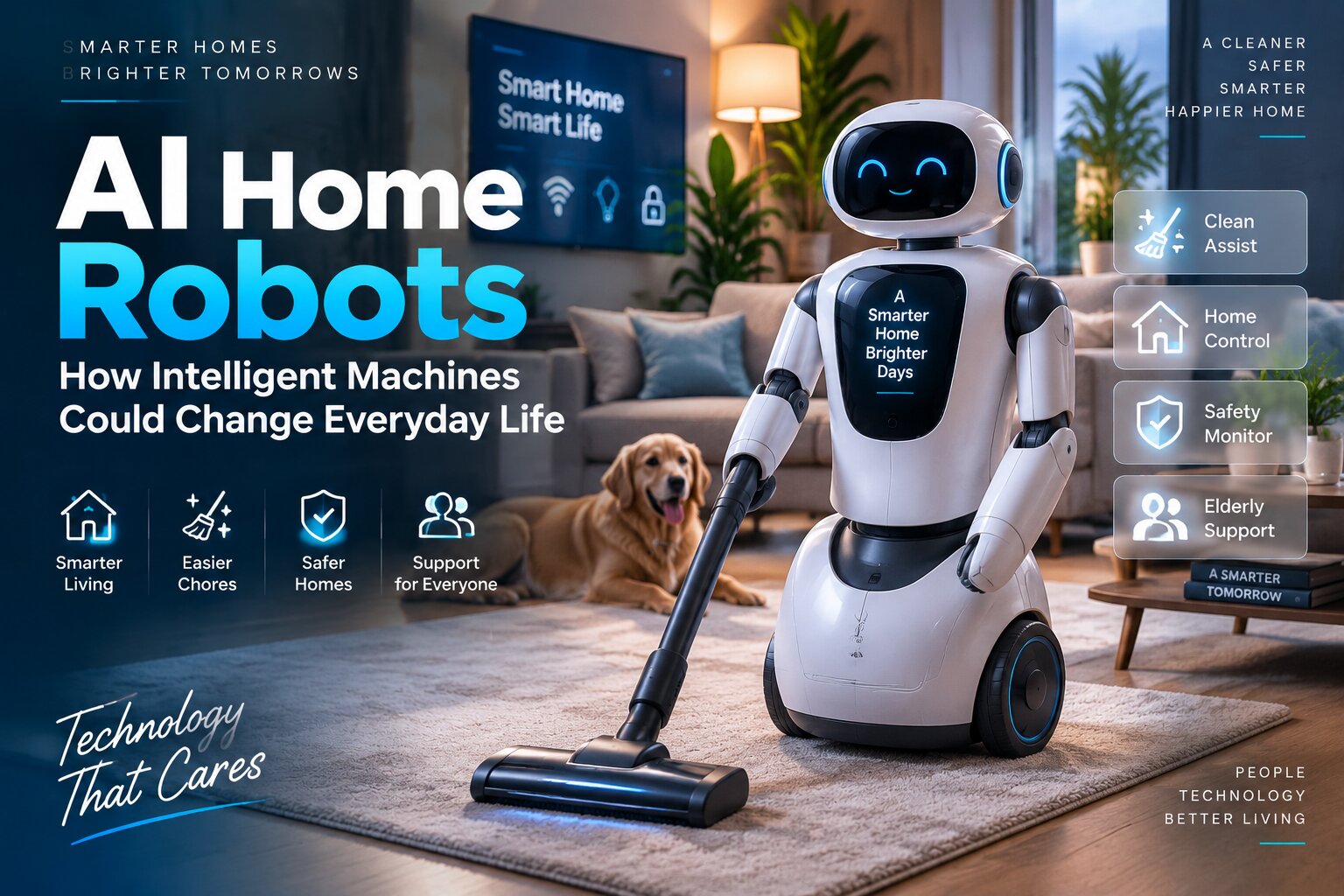
AI home robots are becoming one of the most exciting areas in the gadget industry as companies explore how artificial intelligence can bring smarter machines into everyday life.
For decades, home robots have been a popular idea in science fiction. Today, advances in artificial intelligence, sensors and robotics are making these machines more realistic and useful.
While fully independent household robots are still developing, the technology is moving quickly toward a future where intelligent machines may assist people with daily activities.
What Are AI Home Robots?
AI home robots are intelligent machines designed to perform tasks inside homes using artificial intelligence, cameras, sensors and robotic systems.
Unlike traditional automated devices that follow simple instructions, AI-powered robots can analyze information, learn from situations and respond more naturally to users.
These robots may help with household tasks, provide assistance, monitor environments and interact with family members.
Why AI Home Robots Are Getting Attention
The growth of artificial intelligence has changed what robots can do.
Modern AI systems can understand speech, recognize objects and make decisions based on information from their surroundings.
This has created new possibilities for home robotics, where machines can become more helpful instead of simply performing repetitive tasks.
How AI Could Help Inside Homes
Future AI home robots could assist people in several ways.
Some possible uses include:
- Helping with household chores
- Managing smart home devices
- Providing reminders and personal assistance
- Monitoring home environments
- Supporting elderly people with daily activities
The goal is not necessarily to replace humans, but to make everyday tasks easier and more convenient.
The Role of AI in Making Robots Smarter
Artificial intelligence is the key technology behind the next generation of home robots.
AI allows robots to understand voice commands, recognize objects and adapt to different situations.
For example, instead of simply moving around a room, an AI-powered robot could understand where objects are located and respond to specific requests.
Challenges Before AI Robots Become Common
Although the technology is improving, several challenges remain.
One major challenge is cost. Advanced robotics requires expensive hardware, sensors and computing technology.
Safety is another important concern. Home robots must operate reliably around people, children and pets.
Privacy is also a major issue because many robots require cameras and microphones to understand their environment.
AI Robots and Elderly Assistance
One area where AI home robots could have a meaningful impact is elderly care.
Many countries are facing aging populations, increasing the demand for technologies that can support independent living.
AI robots could potentially help with reminders, communication, emergency alerts and basic assistance tasks.
Are AI Home Robots Replacing Humans?
The purpose of home robots is not to replace human relationships or daily human activities.
Instead, they are designed to provide support and reduce the burden of repetitive tasks.
Similar to smartphones and smart home devices, robots may become tools that help people manage their lives more efficiently.
The Future of Smart Homes
The future of smart homes may include a combination of connected devices, artificial intelligence and robotics.
Instead of controlling every device manually, users may interact with intelligent systems that understand their needs.
AI home robots could become one part of this larger connected ecosystem.
What Users Should Know
AI home robots are still developing and are not yet common in most households.
However, improvements in AI, battery technology and robotics are bringing the industry closer to practical home solutions.
The next generation of gadgets may not only fit in our hands or pockets. Some may move around our homes and actively assist us.
Final Thoughts
AI home robots represent an interesting combination of artificial intelligence and consumer technology.
Although challenges around price, safety and privacy remain, these machines could become an important part of future smart living.
The future of gadgets may not only be about smarter screens, but also smarter machines that help people in everyday life.