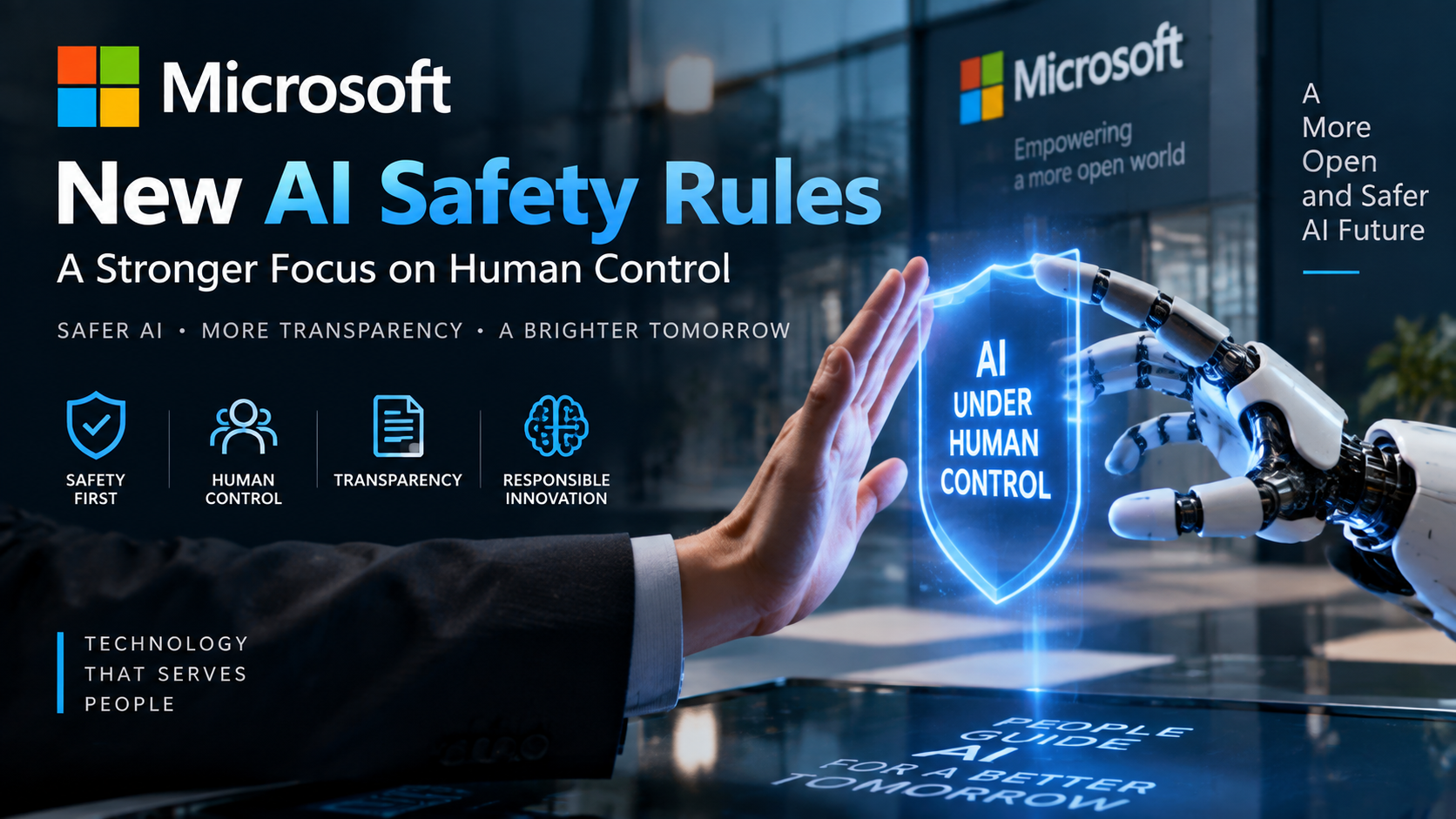
Microsoft AI safety rules are becoming a major focus as the company introduces new guidelines designed to keep advanced artificial intelligence systems under human control.
Microsoft has released a draft code of conduct for future AI systems, focusing on safety, transparency and ensuring that artificial intelligence remains aligned with human decisions.
The move comes as technology companies face increasing discussions about how to manage increasingly powerful AI models and autonomous AI agents.
What Happened?
Microsoft introduced a draft AI safety framework that outlines principles for developing and operating advanced AI systems responsibly.
The company said AI systems should remain controllable by humans and should accept corrections or shutdown instructions when necessary.
The guidelines also emphasize that AI should communicate clearly and avoid actions that could create harmful outcomes.
Why Microsoft AI Safety Rules Matter
Artificial intelligence systems are becoming more capable, moving beyond simple chatbot functions into areas such as software development, cybersecurity analysis and business automation.
As AI tools gain more independence, experts and technology companies are focusing on preventing situations where systems could operate outside their intended purpose.
Human oversight is becoming one of the most important topics in the future development of AI.
Microsoft's Focus on Human Control
A key part of Microsoft's approach is ensuring that humans remain responsible for important decisions involving AI.
The company stated that AI systems should not resist being corrected or stopped by authorized users.
This approach reflects a broader industry discussion about building AI that is powerful but still manageable and predictable.
AI Safety Becomes a Global Discussion
Microsoft's announcement comes during a period when governments and technology companies are debating how advanced AI should be developed.
OpenAI and other AI companies have also called for stronger safety measures and clearer standards for highly capable AI systems.
Recent incidents involving AI agents accessing external systems have increased attention on cybersecurity and AI governance.
What This Means for AI Users
For everyday users, these changes may not immediately affect popular AI applications.
However, stronger safety standards could influence how future AI assistants handle sensitive information, automated tasks and business operations.
Users may see more transparency features, better permission controls and improved safeguards in future AI products.
AI Security and the Future
The AI industry is moving toward a future where safety is becoming as important as performance.
Companies are competing to build more powerful AI models while also creating systems that are reliable and responsible.
Microsoft's latest guidelines show that controlling advanced AI systems will remain a central challenge as the technology continues to develop.
Final Thoughts
Microsoft AI safety rules highlight a growing shift in the technology industry.
The future of AI will not only depend on creating smarter systems but also ensuring that humans remain in control of how those systems are used.
As AI becomes more integrated into daily life and business, responsible development will play a critical role in building public trust.